If you have ever saved a smile photo and thought, "I need veneers," pause for a second. In cosmetic dentistry, the first question is not which treatment looked good on a screen. It is what is actually bothering you. Often, an "I want veneers" request is really a colour complaint. Whitening may solve it without removing tooth structure, and bonding can often help without replacing the front surface.
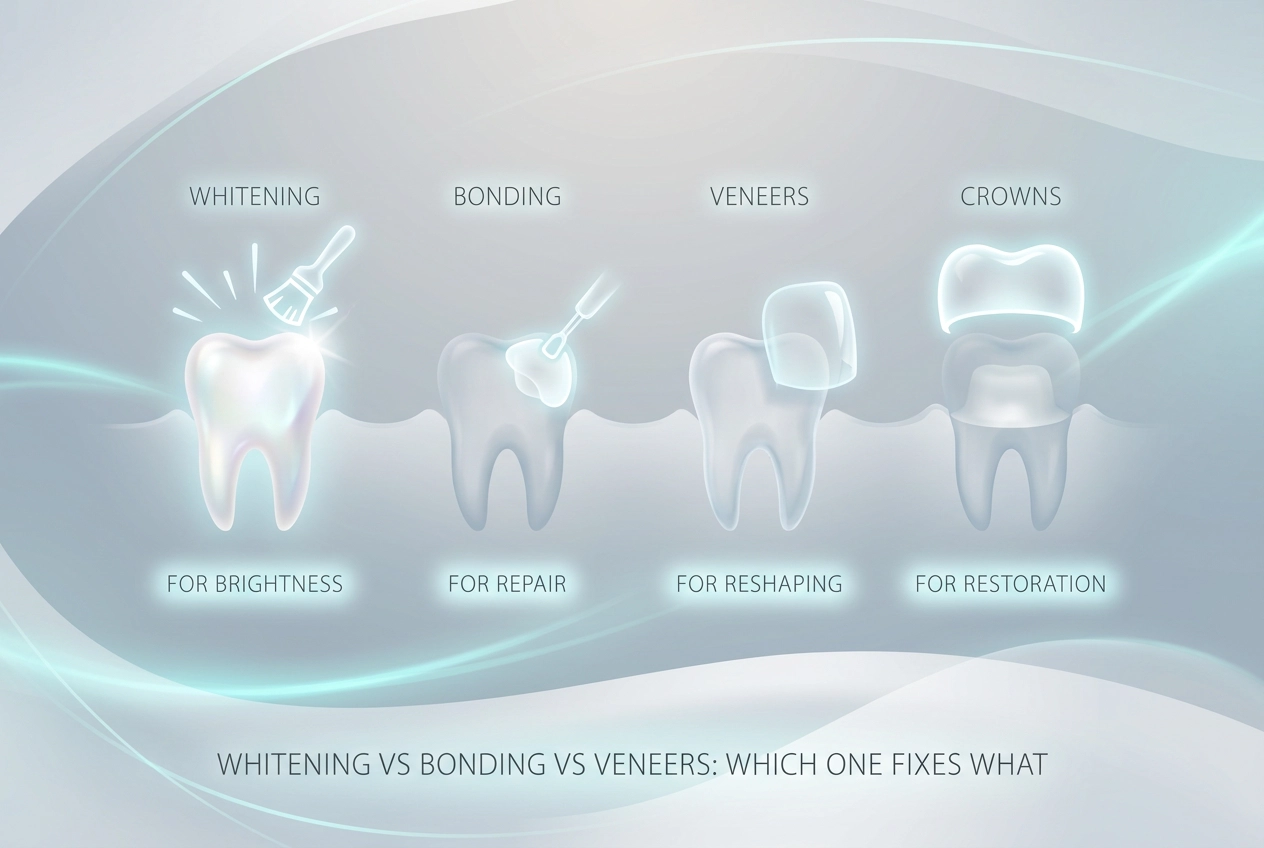
That matters because the three main options change your teeth by very different amounts. Whitening changes shade only. Bonding adds or reshapes composite on top of your existing enamel. Veneers replace a thin layer of the front surface. In this post, we rank them from least to most tooth changed, explain which complaint each one fixes, and cover when a crown is the better answer. We will also look at how a cosmetic dentist builds a plan around your own face, bite and gum line instead of a template. You will also get answers to common questions, including whether veneers can look like someone else's smile and whether whitening works on existing bonding or veneers. By the end, you will know what to do first.
Cosmetic Dentistry Options Ranked: Least to Most Tooth Changed
Before comparing treatments, ask what is bothering you. A color complaint, a chip, a gap, and a worn edge each lead somewhere different, which is why cosmetic dentistry starts with diagnosis, not a menu.
Option | What it changes | What it cannot change | Complaint it fixes | Reversible? |
|---|---|---|---|---|
Whitening | Shade of natural enamel only | Gaps, chips, shape | Yellowing | Yes |
Bonding | Adds composite on existing enamel | Intrinsic color, whole-smile shade | Chips, small gaps, worn edges | Mostly |
Veneers | Replaces a thin front surface layer | Back of tooth, bite protection | Color plus shape | No |
Crown | Covers the whole visible tooth | Nothing it covers | Cracked, heavily filled teeth | No |
A 2021 literature review that screened 25 studies published between 2009 and 2019 concluded that whitening is one of the simplest, quickest, and least invasive treatments for darkened teeth, at low cost compared with other aesthetic options (study).
No source in this research gives a millimeter or percentage figure for how much enamel bonding or veneers add or remove, so this ranking stays qualitative. Ask your dentist what your specific tooth would lose, and whether the honest answer is restorative dentistry instead.
Whitening: It Changes Shade, and Nothing Else
Whitening removes nothing. Peroxide-based gels, usually hydrogen peroxide or carbamide peroxide, lighten the shade of natural tooth structure. One 2014 review found this approach safe and effective when manufacturer instructions are followed.
It cannot close a gap, rebuild a chipped edge, lengthen a short tooth, change texture, or lighten existing composite bonding and porcelain veneers.
The same review lists sensitivity and gingival irritation as common, plus surface roughening and softening, degradation of restorations, and unacceptable color change in existing restorations.
Cause comes before protocol. A 2021 review separates intrinsic discoloration, color from trauma, root canal problems or pulp necrosis, from extrinsic discoloration from coffee, tea, wine, tobacco or some medicines, and says each cause needs its own protocol.
It recommends combining office and home techniques to limit damage to tooth structure, with individualized plans rather than one routine for everyone. Smile Studio offers whitening, planned from your exam rather than a shade chart. Where whitening stops, bonding picks up.
Bonding: Composite Added on Top of Your Existing Enamel
Bonding changes more than whitening and less than veneers. Tooth-colored composite resin is added onto existing enamel and dentine, then shaped and polished. Because bonding adds rather than removes, it is generally considered the most conservative of the three, but confirm with your dentist what, if anything, your specific tooth would lose.
What it fixes
A chipped front edge, a small gap, a tooth that is short or slightly rotated, a small dark spot, or an uneven edge after wear.
Where it falls short
Composite is a surface material. It stains, chips under heavy bite forces, and needs repolishing or replacement sooner than porcelain. Heavy grinding should be addressed first.
Order matters
Composite does not respond to whitening. Whiten afterward and the natural teeth around it lighten while the patch stays put, so decide the order before either treatment.
Best for one or two teeth, or a small fix on an otherwise healthy tooth. For color across many teeth, whitening or veneers is more efficient. Smile Studio of Rehoboth offers bonding.
Veneers: A Thin Layer of the Front Surface Replaced
Bonding adds material; a veneer replaces the surface. It is a custom shell, usually porcelain, bonded to the front of the tooth. Preparation typically involves the front enamel surface, which is why the decision to place a veneer warrants careful consideration, ask your dentist exactly what your tooth would lose.
Veneers fit complaints bonding cannot cover: intrinsic color whitening cannot reach, shape, length, symmetry, small gaps, worn edges, or color change across several front teeth, where one planned treatment beats a series of small ones. That is where searches for dental veneers for teeth usually start.
A veneer covers the front surface only. A cracked, heavily filled, or root-treated tooth that must resist bite forces needs coverage, not a facing.
Color is locked in: porcelain never lightens with whitening, so the shade is set at the start while the teeth around it may drift. That is a planning conversation, not a dealbreaker.
Before agreeing, ask how much tooth will be removed, why a veneer instead of a crown, what maintenance involves, and how the shade is matched to your teeth.
Which Complaint Does Each One Actually Fix?
Veneers and bonding change shape; whitening only changes shade. Which one you need depends on what is actually bothering you.
Extrinsic stain is the classic whitening case. It sits on the outside, from coffee, tea, wine, tobacco or some medicines, and responds to whitening, hygiene and polishing without changing tooth structure.
Intrinsic stain is different: colour from inside the tooth after trauma, root canal problems or pulp necrosis. Whitening may partly help, but a single dark tooth often needs another approach, so diagnosis drives the choice.
Shape complaints are not a whitening problem. A chip, gap, short tooth, worn edge or uneven smile line won't change at any strength or number of sessions.
Whole-smile colour is where veneers questions start. Colour alone? Whitening handles it while changing nothing irreversible. Colour plus shape plus proportion across many teeth? Veneers have a clearer case.
In our experience, many people asking for veneers describe colour alone. No published data confirms how common that is, so treat it as an observation to test at your exam.
Dental Crowns vs Veneers: When a Crown Is the Right Answer
When whitening, bonding and veneers all work on the surface, a crown is the option that wraps the tooth. A veneer covers the front face only. A crown covers the whole visible crown above the gum line. That structural difference decides most cases.
Crowns suit a large fracture, heavy previous fillings, a root canal treated tooth that has become more brittle, or a tooth that has to absorb heavy bite forces.
Veneers suit a tooth that is structurally sound, where the complaint sits on the front surface alone.
No universal number settles this. Research gives no threshold for when a crown replaces a veneer. Your X-rays, how much tooth remains, your bite and where your gum sits make that call. The two also differ in how much tooth is prepared, the material used and typical lifespan, so ask why, not just what. "Why a crown rather than a veneer?" is a fair question, and the answer should name the tooth structure that is missing. Smile Studio of Rehoboth offers crowns alongside veneers and bonding, and any recommendation should arrive with its reasoning attached.
Cosmetic Dentist Procedures: The Plan Is Built Around Your Face, Bite and Gum Line
Whichever name ends up on your treatment plan, the shape of it should come from you. The case against template smiles is the same: no single routine fits every patient.
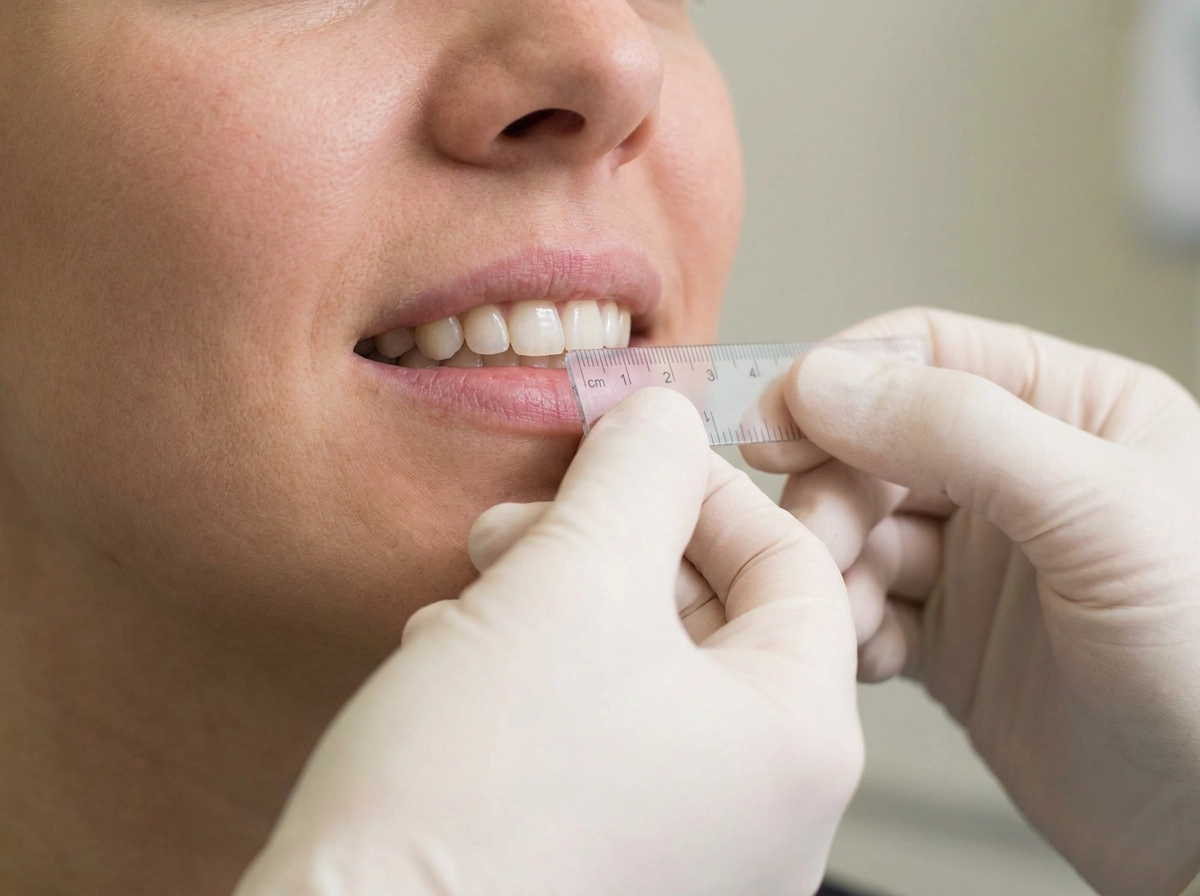
Three things drive those choices. Face: tooth proportions, the midline between your front teeth, how much tooth shows when you smile, and where your lip rests. Bite: how the front teeth meet, existing wear, and grinding. A bonded edge or crown that ignores your bite can fail early. Gum line: where the gum sits, whether it is even, and whether one tooth reads longer than its neighbor. Veneers and crowns are shaped to that line.
Smile Studio of Rehoboth's stated approach is to plan treatment with patients rather than present it, explain findings in plain language, and run visits on time. If a plan cannot be explained in plain words, ask again. That planning can sit alongside your general and preventive care, or point toward dental implants if a tooth is missing.
Cosmetic Dentistry Questions Patients Ask Before Choosing
The questions that surface most often at a first cosmetic consultation are worth settling before anything is booked. Which option changes the least tooth? Does whitening work on bonding? Why a veneer instead of a crown? Our Frequently Asked Questions page covers the practical side, including what to expect if you are anxious about being there.
Short answers help, but the useful answer is always specific to your teeth. Expect an exam and X-rays before anyone recommends a treatment.
If a treatment is suggested before anyone has looked at why your teeth look the way they do, slow down and ask what is being diagnosed.
Will Dental Veneers for Teeth Look Like Someone Else's Smile?
Veneers can look like someone else's smile, but only if they are chosen from a template instead of from your face. Shade, length and shape should be selected against your other teeth, your lip line and your gum line.
Before anything is prepared, ask to see the plan. Which teeth are involved? What is the shade matched to?
Ask whether whitening first would simplify shade-matching, since porcelain does not lighten afterward.
Finally, fewer veneers is often the better answer than more. If the rest of your smile is sound, one or two teeth may be all you need.
Does Whitening Work on Existing Bonding or Veneers?
The short answer is no. As noted above, whitening does not change composite bonding, porcelain veneers or crowns.
That mismatch is a known risk. The 2014 review on whitening lists degradation of restorations and unacceptable color change of existing restorations among its documented concerns.
If you already have bonding, there are two usual routes. Whiten first, then replace or rematch the bonding to the new shade. Or leave your current shade alone and plan around it.
A 2022 in vitro study of 200 bovine incisors across 20 groups found carbamide peroxide produced visible color change in some groups, using a visibility threshold of ΔE greater than 3.3. Those were animal teeth, so the result does not transfer to patients and supports no promise.
Next: what to ask before you agree to veneers.
Cosmetic Dentist for Veneers: What to Ask Before You Agree
If you're leaning toward veneers, bring that one sentence about what you see in the mirror, color, shape, a gap, a chip, and let it drive the conversation.
Then ask four questions:
Would whitening or bonding fix this complaint first, and what would each change about my tooth?
Why a veneer instead of a crown, and how much tooth does each option remove?
How is the veneer maintained, and when would it need replacing?
What material would you use, and what happens if I decide to stop partway through?
That approach is part of why patients may choose Smile Studio of Rehoboth, which is opening soon at 19411 Plantations Road, Rehoboth Beach, DE 19971 and welcoming new patients now. Questions can go to info@rehobothsmiles.com.
What to Do First
Return to that one sentence: color, shape, a gap, a chip, or a mix.
Ask for the cause before the plan, the right treatment follows from it.
If the complaint is color, start reversible. Whitening changes shade only. Bonding can be added to, polished or replaced without removing healthy enamel.
Ask directly when a crown beats a veneer, and how much tooth each option removes, before you agree to either.
Then book a visit that opens with an exam and a plain-language explanation, not a treatment menu. Smile Studio of Rehoboth is opening soon at 19411 Plantations Road, Rehoboth Beach, DE 19971, and it's welcoming new patients. Email info@rehobothsmiles.com, or read more about a thoughtfully designed new dental experience.
Conclusion
Each option changes a different amount of tooth, from shade-only whitening to full-coverage crowns. The deciding factor is not a trend or a photo; it is the cause behind your complaint. Color, shape, gaps, chips, and damage each point to a different option.
Smile Studio of Rehoboth is opening soon at 19411 Plantations Road, Rehoboth Beach, DE 19971, and is welcoming new patients. Email info@rehobothsmiles.com to take the first step toward a plan built around your face, bite, and goals.