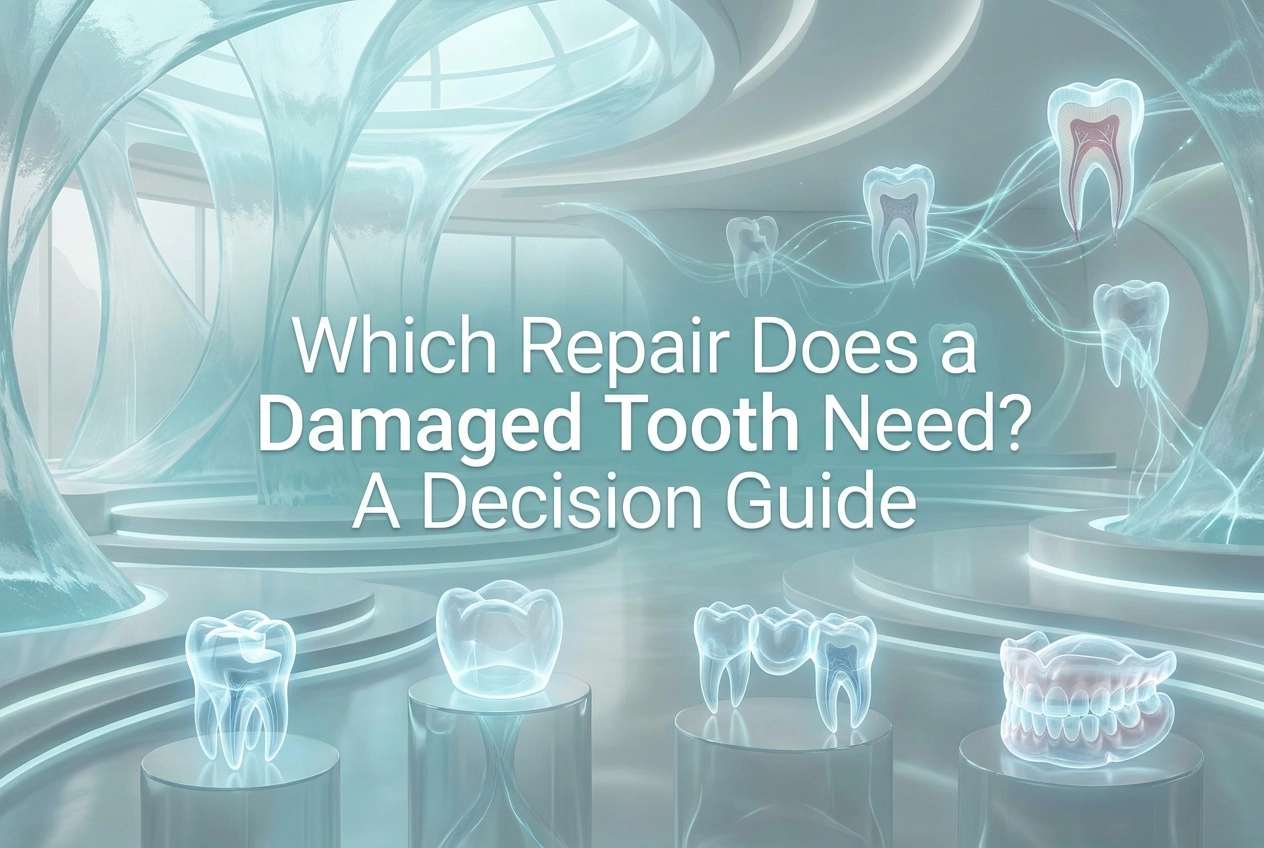
You are chewing on your favorite snack and feel a sharp zing. Or maybe you notice a rough edge on a back tooth that was not there yesterday. Suddenly, you are facing a question most of us dread: what is actually needed to fix this?
The answer is not a one-size-fits-all treatment. It comes down to how much healthy tooth structure remains, where that tooth sits in your mouth, and how hard you work it. A small, contained area of decay often calls for a filling. A cracked or heavily patched tooth may need a crown to hold it together. When a tooth is already gone, a dental bridge or partial denture can close the gap when an implant is not wanted or not possible.
In this post, we will walk through each option in plain language. You will learn what every repair fixes, what it demands in visits and money over the years, and the moments when waiting and watching is smarter than rushing in. We will also cover what to ask before you agree to anything.
Your Tooth Picks the Repair, Not the Price List
Patients often walk in asking about a repair they saw advertised. That is one reason people seek restorative dentistry, but the tooth rarely agrees.
Three variables decide it: how much sound tooth structure survives after the damaged part is cleaned out, where it sits and what it does all day, and how hard you use it through grinding, clenching, or ice chewing.
Small, contained decay still surrounded by thick enamel and dentin usually needs the smallest repair that will hold, not the biggest. A cracked tooth, one refilled twice already, or one missing a cusp is a different problem: the walls that would grip a filling are gone.
Position matters. Front teeth are judged by appearance and take light force; first molars carry the heaviest load and fail sooner under thin repairs.
Cost and advertising belong at the end of the conversation. The cheapest option today can cost more over five years if it fails and forces a larger rebuild. This is a framework, not a menu. The same cavity in two mouths can call for two different repairs.
Fillings: The Repair for Small, Contained Decay
A filling fits a cavity, or a worn edge or small chip with healthy tooth on all sides, so the remaining walls still support the material.
There has to be enough sound structure to bond to. Once a cavity or old filling spans more than about half the distance between the cusps, the filling acts like a wedge that spreads the tooth instead of holding it together.
Expect one appointment, often under an hour, with local anesthetic and normal chewing the same day. Tooth-colored composite is the modern default on visible teeth. Silver amalgam fillings still show up in some back teeth, where they remain a low-cost, high-longevity option.
A filling is the wrong call for a cracked tooth, a fracture line running under the gum, or a tooth that has already been filled and refilled. Another patch buys months, not years.
Afterward, call the office if sensitivity lingers or the filling feels high when you bite. Both are quick to fix and not worth waiting out. When the walls are gone, the conversation changes.
A Crown on a Tooth: When Rebuilding Beats Patching
A cracked, heavily filled, root canal treated, or worn-flat tooth is where patching stops working. A crown covers what remains and holds it together, instead of pushing the tooth apart like another filling would.
It needs a solid, clean core of tooth above the gum line. A tooth broken off below the bone needs a different plan entirely.
Expect two visits: one to shape the tooth and scan or impress it, one to fit the finished crown, with a temporary in between. Some offices now offer same-day crowns.
Crowns are generally expected to outlast large fillings, though lifespan depends on how much tooth remains underneath, your bite forces, and hygiene at the margin where crown meets tooth. In one retrospective study, cracked root-treated teeth restored with full crowns had 97% survival, versus composite-patched teeth.
They fail from decay at that edge, a root fracture below it, or an unaddressed grinding habit, the fixable one that is most often overlooked.
The honest tradeoff: a restored tooth is never as strong as it was before damage. A crown restores function without pretending otherwise.
What Actually Drives Dental Crown Cost
Once a crown is the right rebuild, the next question is cost. That number isn't set by advertising. Four things move it.
Material. Porcelain fused to metal is usually the cheapest tooth-colored option; all-ceramic, zirconia, and gold alloys cost more. Back teeth offer more material choices; front teeth narrow your options.
The tooth underneath. A crown may not be the whole job. A root canal, core build-up, or gum treatment first adds to your total.
The lab. Digital scans versus impression trays, and whether the crown is milled in-house or by an outside lab, shift both cost and turnaround.
Insurance shape. Most plans pay a percentage up to an annual maximum, and coverage can differ between a first crown and one on a heavily repaired tooth.
Fee surveys vary by region and year, so treat any quote as dated. A 2026 survey of cash prices put the national average at $1,369 per tooth, with state averages from $1,046 to $2,331, based on 2023-2024 data. Your real question is what a crown costs for your tooth, including everything that must happen first.
Dental Bridge and Partial Denture: Closing a Gap After a Tooth Is Gone
Crown pricing reflects the tooth underneath. When it's gone, the question becomes closing the gap.
A bridge replaces one or a few missing teeth in a row, anchoring a false tooth to the neighbors, which get shaped down like crowns. It's essentially crowns plus a spare tooth.
A partial denture covers several missing teeth across an arch. It's removable, comes out at night, and holds with clasps or precision attachments, not cutting neighbors down.
A bridge feels closest to natural teeth, but anchors carry the missing tooth's load and cleaning underneath is hard. A partial costs less up front, extends easily later, and restores lip and cheek support, though it shifts when you chew and needs somewhere to rest.
Both depend on healthy anchors. When neighbors are compromised, a dental implant often comes up instead. A bridge or partial still works when an implant isn't wanted or possible because of bone, health, or time.
Neither touches the bone where the tooth was, so the ridge changes shape and both eventually need attention.
Tooth Bridge Cost and Partial Denture Cost: What Moves the Number
The number of missing teeth sets the scale. A three-unit bridge closing one gap costs far less than a five-unit bridge spanning three missing teeth. Bridge pricing tracks crown pricing closely, because you're paying for two or more crowns plus the false tooth between them, so material and lab work move the number the same way.
Anchor tooth condition adds to your real bill. If the supporting teeth need root canals, build-ups, or gum treatment first, that's charged alongside the bridge, not inside it.
Partial denture cost depends on how many teeth it replaces, whether the framework is metal or flexible, and whether it needs re-lining as your gums change shape, which is common in the first year or two.
Insurance treats these differently. Replacing a missing tooth may carry a waiting period or a lifetime limit per tooth position.
Compare cost per year of service, not cost per visit. A denture may be re-lined or remade within a few years, while a well-maintained bridge can serve much longer. Weigh both against the cost of doing nothing. Any price you read should name its year and location, because fees vary by region and shift annually.
When Taking the Tooth Out Beats Patching It Again
Ask how many times this tooth has already been repaired. Every round removes more sound structure, and the fourth repair rarely lasts. A vertical root fracture, a split below the bone, advanced bone loss around the root, or pain that lingers after a root canal are cases no filling or crown can hold together.
Keeping a hopeless tooth costs more than money. Infection comes and goes, you favor the sore side and your bite shifts, and the neighbors take extra load. Plan extraction and replacement in one conversation, so you know what fills the space before the tooth leaves.
Timing matters because bone does not wait. The ridge under a gap shrinks fastest in the first three months, and much is gone within a year, which can limit later implant placement or complicate a bridge.
Choosing removal is not giving up; it stops a losing cycle and returns you to chewing on a plan you can maintain. A gap in care is not a moral failing, and easier to plan around than a tooth that keeps failing.
The Real Cost of Each Repair Over Years, Not Weeks
Once the tooth is out, the math shifts from one price to cost per year of service. A cheaper repair replaced three times can outspend one done properly once.
Time off work counts too. A filling is usually one visit. A crown runs about two. An implant and its final restoration can stretch across months of healing.
Daily upkeep splits the options. A bridge needs floss threaders or interdental brushes underneath every day. A denture needs cleaning and periodic re-lining. A single filling asks only for ordinary brushing and flossing.
Check your calendar before scheduling. Dental insurance annual maximums reset each year, so splitting treatment across two calendar years sometimes lowers what you pay out of pocket.
Treat longevity claims as ranges, not promises. Lifespans depend on the tooth, your bite, and home care, and there is no guarantee of outcomes.
Ask for the estimate in writing, broken into today, the next visit, and the next five years. That one page usually settles the decision better than any brochure. Before you commit, know what to ask.
Sometimes the Right Answer Is to Wait and Watch
Sometimes the cheapest five-year repair is no repair. A small cavity still in enamel, or early decay that has stopped progressing, can sometimes be monitored with X-rays and a fluoride plan instead of drilled the same day. A hairline crack with no symptoms may not need a crown yet, but it should be checked at every visit.
Watch and wait is not ignore. It means a scheduled review, new X-rays compared to old ones, and clear signs that would change the plan. A gap in care is information, not a failing.
Some things cannot wait: pain on biting, throbbing, swelling, a broken cusp, a lost filling, or decay reaching the nerve on an X-ray. Those move the timeline up.
Which case you're in takes an exam, current X-rays, and often a bite test. Phone and photo estimates are guesses.
Ask the risk of waiting six months, and what would be lost if the tooth worsened. The answer says a lot.
What to Ask Before You Agree to Any Repair
Even if waiting is the plan, leave with answers. Before agreeing to any repair, ask five things.
How much tooth remains? After the damaged part comes out, how much sound structure is left, and what does that look like in six months?
What are the alternatives? Ask what would change the recommendation. That turns a verdict into a plan.
What does it cost, and when? Split the total into today, the next visit, and a five-year window, plus what insurance covers.
Is grinding part of the problem? Ask whether a night guard or bite adjustment belongs in the plan. Unaddressed grinding is a common reason repairs fail.
Who does what? Root canals, implant placement, and lab work may go elsewhere, so ask about the referrals we make before scheduling.
Smile Studio of Rehoboth offers fillings, crowns, bridges, dentures and implants, and plans treatment with patients rather than presenting it, with findings explained in plain language. Reach us at 19411 Plantations Road, Rehoboth Beach, DE 19971 or info@rehobothsmiles.com. We're opening soon and welcoming new patients.
Takeaways: Match the Repair to the Tooth in Front of You
By the time you're weighing an estimate, the tooth has usually already made the call. Here's the short version:
Small, contained decay: a filling is often enough when healthy walls surround the defect. The smallest repair that holds is the right one.
Cracked, worn, or heavily filled: a crown rebuilds it, because more filling material pushes the tooth apart instead of holding it together.
Missing tooth: a dental bridge or partial denture closes the gap. An implant is a third option worth discussing when it's wanted and possible.
Repaired repeatedly or fractured below the bone: ask whether removal plus replacement beats a fourth patch.
Money: compare cost per year, not per visit, and get the estimate in writing.
Minor, stable damage: watching it with regular X-rays can be the honest answer. If pain, swelling, or a broken cusp shows up first, general first-aid guidance while you arrange care helps you get through until your exam.
Schedule an exam to find out which case you're in.
Conclusion
The repair should fit the tooth, not the price list. Small, contained decay often calls for a filling. A cracked or heavily filled tooth may need a crown to rebuild instead of patch. A missing tooth may be closed with a bridge or partial denture; an implant is another option worth discussing. If a tooth has been repaired repeatedly or fractures below the bone, removal plus replacement can beat another patch. Compare cost per year, not per visit, and remember that watchful waiting with regular X-rays can be the honest answer.
Your next step is an exam. Smile Studio of Rehoboth offers fillings, crowns, bridges, dentures and implants, and plans treatment with patients rather than presenting it, with findings explained in plain language. Reach them at info@rehobothsmiles.com. They're opening soon and welcoming new patients. Bring your questions and choose the repair that protects your smile for years to come.